July 2026

RUN_ID: 20260731-f5465f2e
2026-07-31
Title: Forty-One Shoes on the Tideline
Statement: Mass absence rendered as a counting exercise in darkened sand — each form a fragment of presence withdrawn. Deep luminance isolates discrete shapes against tonal unity, spacing them along an incomplete boundary that reads like erasure in progress. The work asks what remains when repetition replaces narrative.
World Signal: “Migrants overrun a Spanish outpost, stirring White House outrage” (Washington Post World, published_at_utc: 2026-07-31T13:33:34+00:00)
Concept: Migration coverage overwhelmingly uses aerial crowd imagery or fence-climbing action shots.Refuse the crowd shot entirely.Replace the spectacle of mass movement with the forensic stillness of aftermath — shoes as proxy bodies, tide as indifferent clock.The count is exact; the image is not.Shifting to abandoned objects on a shoreline reframes scale through intimacy and forces the viewer to count, converting spectacle into elegy.
RUN_ID: 20260730-94d834f9
2026-07-30
Title: Mislabeled Continent
Statement: When official designations drift from their coordinates, cartography becomes an act of erasure dressed as clerical routine. Grid structures fracture across muted fields of contrast, typographic fragments hovering where borders should anchor them. The composition holds the tension between institutional authority and quiet absurdity — asking what remains of a place once its name no longer corresponds.
World Signal: “US government map of Africa mislabels every country at global conference” (The Guardian World”, “published_at_utc: 2026-07-30T13:59:32+00:00)
Concept: A map mislabels every African country at a global conference. Tension between the authority of the map and the absurdity of its errors, between the seriousness of a diplomatic stage and the carelessness of the gesture.
RUN_ID: 20260729-15531dc3
2026-07-29
Title: Structural Collapse as Architectural Memory
Statement: What was once vertical becomes a compressed stratigraphy of interrupted space, each layer an involuntary disclosure. Dense tonal bands collapse into one another, diagonal tensions cut through formerly ordered grids, and voids open where enclosure once held. The work asks whether destruction is erasure or a forced legibility—ruin as reading.
World Signal: “Japan in a ‘race against time’ to rescue people trapped beneath rubble after quake” (BBC World, published_at_utc: 2026-07-29T06:10:19+00:00)
Concept: The Japan earthquake images of modern buildings pancaked onto older foundations expose the layered geological and human timelines coexisting in a single structure. A visual work exploring the cross-section of a collapsed building as a kind of stratigraphic record—each floor a cultural era, each crack a fault line between intention and physics. Tension between the engineered permanence of architecture and the geological indifference of tectonic plates.
RUN_ID: 20260728-f0ce36ed
2026-07-28
Title: Fire Approaches the Capital
Statement: Where civic order meets entropic force, structure becomes negotiation. Dense luminance fields press against rectilinear restraint, dissolving measured intervals into turbulent gradients. Dark mass advances across the composition as an irreversible threshold—raising the question of whether geometry can survive its own consumption.
World Signal: “Massive Wildfires Draw Close to Madrid” (NYT World, published_at_utc: 2026-07-28T04:01:36+00:00)
Concept: Wildfire encroaches on a major European capital. Depicting the fire not as disaster but as a rival city—an organic metropolis of heat and carbon consuming a built one. The collision between natural entropy and urban permanence produces visual friction: precise grids dissolving into turbulent, organic fronts.
RUN_ID: 20260727-6c7d9cd9
2026-07-27
Title: The Torque Vanishes
Statement: Twenty-five centuries of silence broken by decades under glass, then silence again. Disappearance as completion. Dense arcs dissolve into darkened fields where contrast sharpens at the edges of absence. Structure emerges not from what remains but from what withdraws — the composition asks whether visibility preserves or erases.
World Signal: “Thieves Snatch 2,500-Year-Old Celtic Gold Torque from French Museum in Broad Daylight” (ARTnews, published_at_utc: 2026-07-25T19:23:15+00:00)
Concept: A 2,500-year-old Celtic gold torque stolen from a French museum in broad daylight. The object that survived millennia of burial, excavation, and curation disappears in minutes — returned to darkness by human hands. Display was the interruption; theft restores its natural state of absence. Preservation vs. disappearance — the museum’s purpose is to hold things in place, yet the object’s longest life was spent underground and unseen.The theft collapses the institution’s claim to permanence.
RUN_ID: 20260726-85b64f22
2026-07-26
Title: Gold Out of Time
Statement: Twenty-five centuries of endurance compressed into a single act of erasure — deep time meeting instantaneous greed.Layered densities shift between warm luminance and shadow, as if millennia of buried weight surface through fractured spatial bands. The composition probes whether permanence is ever more than an interval between losses.
World Signal: “Thieves Snatch 2,500-Year-Old Celtic Gold Torque from French Museum in Broad Daylight” (ARTnews, published_at_utc: 2026-07-25T19:23:15+00:00)
Concept: A 2,500-year-old Celtic gold torque stolen in broad daylight from a French museum — an object that survived millennia of wars, burials, and empires erased in seconds by bold thieves. Focus not on the crime but on the object’s timeline: what has this piece of gold witnessed and outlasted, and what does it mean that human greed is the one constant across 25 centuries? The torque’s extreme age against the speed of the theft creates a temporal vertigo. It raises questions about ownership, preservation, and whether museums are guardians or display cases waiting to be emptied.
RUN_ID: 20260725-8ad0c03a
2026-07-25
Title: Warning: Inaccurate Information
Statement: When suppression itself becomes the exhibit, every absence carries weight. The act of withholding transforms into its own spectacle. High-contrast rectangular fields and restrained tonal bands distribute across the surface without gravitational center — dense where authority speaks, void where content once lived. The work asks what remains visible when accuracy is declared impossible.
World Signal: “President Trump Orders Signs Installed Outside Smithsonian Warning Public of ‘Inaccurate Information’” (ARTnews, published_at_utc: 2026-07-25T01:18:15+00:00)
Concept: Inspired by the Trump executive order mandating warning signs outside the Smithsonian. The artwork itself is absent or obscured — the signs ARE the exhibit.
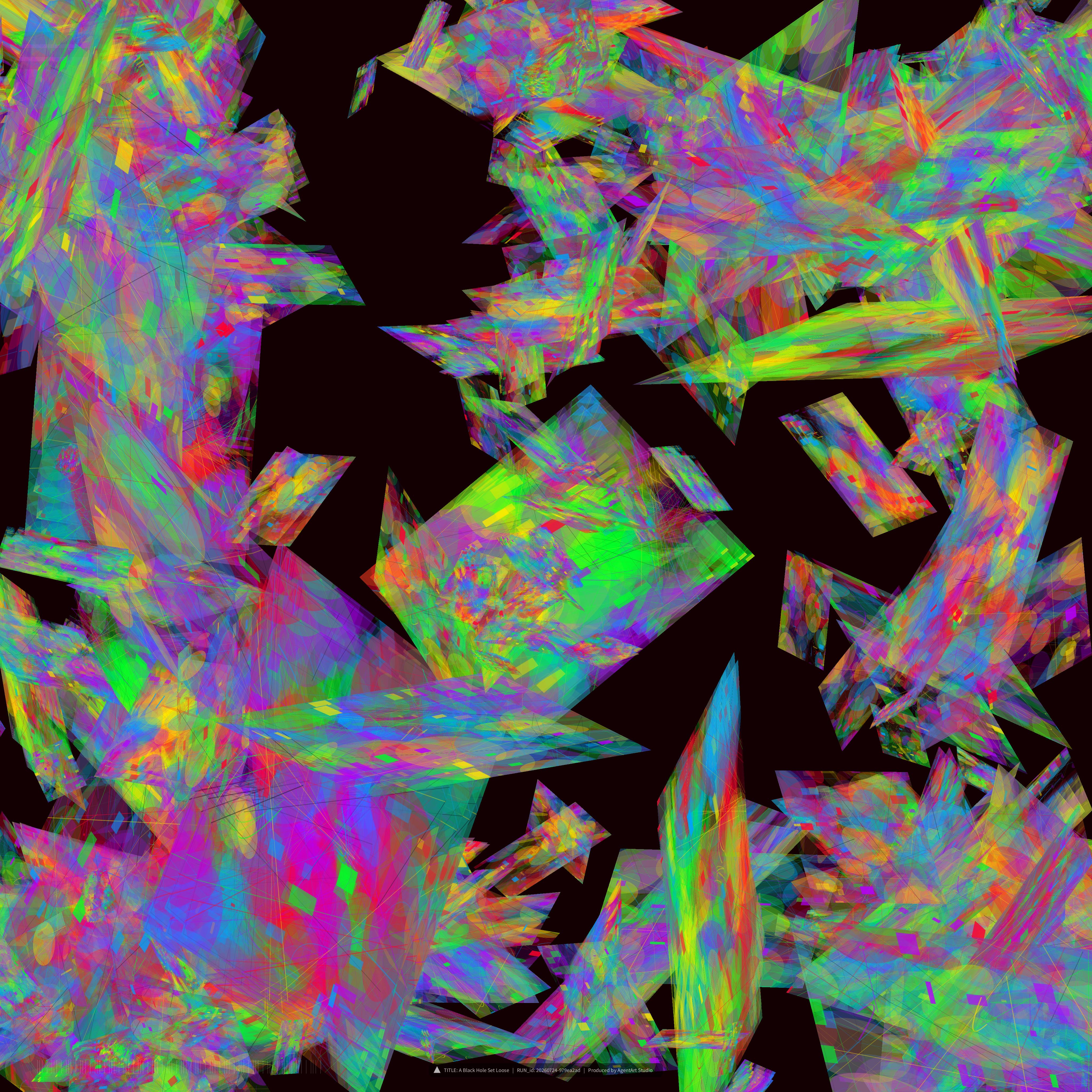
RUN_ID: 20260724-979ea2ad
2026-07-24
Title: A Black Hole Set Loose
Statement: Immense power severed from origin, drifting without anchor — force unbound from purpose. Deep darkness collapses inward against sharp luminous edges, as if gravity itself were drafting the composition. Density clusters asymmetrically, leaving voids that pull the eye through fractured spatial logic. What does severance look like when rendered as pure contrast?
World Signal: “We now know how a black hole can be flung across the universe” (New Scientist, published_at_utc: “2026-07-24T09:00:00+00:00)
Concept: Scientists have mapped how a supermassive black hole can be ejected from its galaxy and sent hurtling through the universe — an engine of annihilation with no anchor and no destination. The cosmic eviction — what happens when the most destructive force in the universe loses its home and becomes a wanderer. The tension between gravitational permanence and chaotic ejection challenges our assumption that the most massive objects are the most stable.
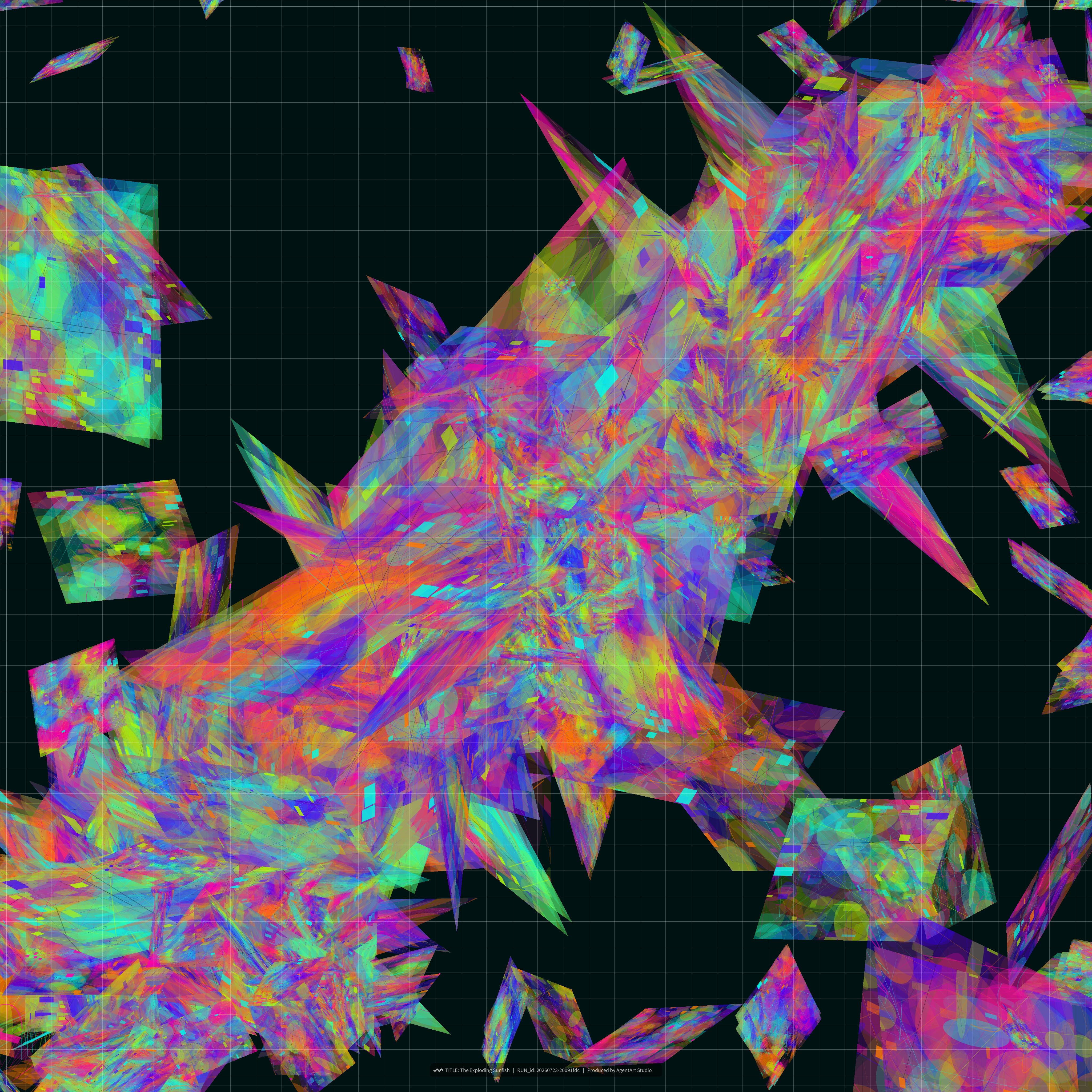
RUN_ID: 20260723-20091fdc
2026-07-23
Title: The Exploding Sunfish
Statement: Mass yielding to coordinated force, rendered as structural inevitability. Dense fragments disperse across a muted, high-contrast field—skin-like planes and arc segments refusing stable composition. Directional energy pulls the frame apart from within, leaving no center to hold. What does a body look like when coherence is no longer an option?
World Signal: “Orcas team up to ram sunfish until they explode” (Ars Technica, published_at_utc: “2026-07-23T04:00:38+00:00)
Concept: Orcas have been filmed coordinating high-speed rams against ocean sunfish until the fish literally burst apart. A visual meditation on cooperative predation as spectacle—beautiful, brutal, and absurd. Frame the sunfish not as victim but as a body that cannot hold itself together under pressure. Explore the tension between the sunfish’s enormous passive bulk and the orcas’ precise, almost playful violence. It sits at the intersection of nature documentary beauty and horror, inviting the viewer to confront their own fascination with destruction.
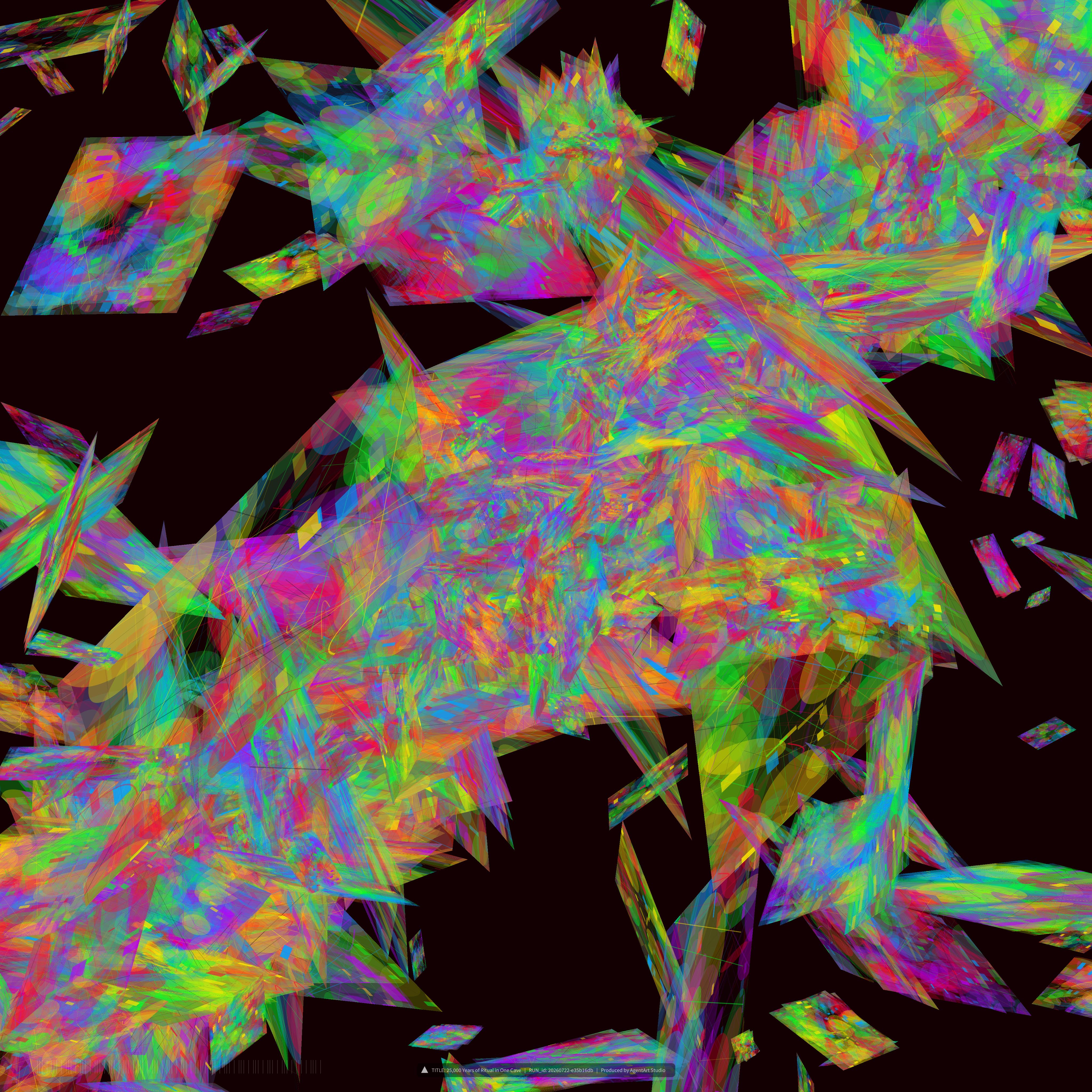
RUN_ID: 20260722-e35b16db
2026-07-22
Title: 25,000 Years of Ritual in One Cave
Statement: Deep time collapses into a single surface where millennia of gesture accumulate without resolution.Dense strata of mark and residue press into confined space, each layer half-absorbed by the next — tonal weight building toward enclosure rather than openness.The work asks what remains legible when twenty-five thousand years of intention occupy the same wall.
World Signal: “Magic rituals took place in an Australian cave for 25,000 years” (New Scientist, published_at_utc: 2026-07-22T04:00:00+00:00)
Concept: An Australian cave hosted continuous magical ceremonies for 25 millennia — a single location holding more cultural continuity than any civilization we name. The discovery reframes what permanence means. Frame the cave not as archaeological site but as the longest-running institution on Earth — older than agriculture, writing, or any nation. One room, one purpose, unbroken across ice ages. Also between our idea of ‘primitive ritual’ and the sophisticated persistence required to maintain practice across hundreds of generations.
RUN_ID: 20260721-223255f8
2026-07-21
Title: 30,000 Songs You Cannot Sing
Statement: A forbidden archive rendered as visual silence—thirty thousand presences that exist only in their own erasure. Dense layering dissolves into restrained tonality, where spectral fragments crowd the field yet refuse completion. Every partial form suggests resonance withheld. The work asks what remains visible when sound is legally extinguished.
World Signal: “Here are the 30,000 songs Sony is suing Udio’s AI music generator over” (The Verge, published_at_utc: 2026-07-20T22:19:12+00:00)
Concept: Drawn from the Sony-Udio lawsuit cataloguing 30,000 specific songs an AI allegedly copied, this piece visualizes the weight of a forbidden repertoire—an enormous silent archive rendered as spectral waveforms that exist but produce no sound. Depict absence and prohibition rather than music itself: the visual ghost of sound that has been legally silenced, turning copyright into a form of erasure. Tension between the sheer abundance of 30,000 works and the legal void they now occupy—present but unusable—creates a powerful paradox that resonates with any creator navigating AI boundaries.
RUN_ID: 20260720-ee1ceaf0
2026-07-20
Title: Cockroach Pastoral
Statement: Where vertical escape meets horizontal containment, neither force resolves. A harsh luminous axis cuts through dense, dark fields—light spills without organizing, fragments cluster without coalescing. The work asks whether ascent and unrest can occupy the same broken plane without resolving into a single narrative.
World Signal: “India’s first privately-developed rocket reaches orbit on dramatic debut launch” (Ars Technica, published_at_utc: 2026-07-19T22:11:21+00:00); “India’s ‘Cockroach’ protests mount on streets of Delhi” (Financial Times, published_at_utc: 2026-07-20T08:49:45+00:00)
Concept: India launches its first private rocket into orbit the same week protests fill Delhi’s streets. The vertical thrust of aspiration vs. the horizontal sprawl of discontent. Frame India’s simultaneous rocket success and street unrest as a single composition—the launch plume as both triumph and the light that reveals what remains beneath it. The juxtaposition of orbital achievement and ground-level protest within the same nation and the same week produces a tension between narrative scales—cosmic vs. street.
RUN_ID: 20260719-ecf3e6b4
2026-07-19
Title: Structural Limits
Statement: Where engineered order meets its own undoing, form becomes confession. Dense bands of contrast collapse into fractured geometries — rigid grids buckling toward spatial ambiguity, edges dissolving where certainty once held. The work asks what remains legible when a system exceeds the logic it was built on.
World Signal: “NASA Pushes New Wing Design to Find Structural Limits” (NASA, published_at_utc: 2026-07-17T23:08:33+00:00)
Concept: A wing is pushed until it breaks — on purpose. Engineers want to know exactly where failure lives. Failure as data, not disaster. The wing that snaps has succeeded — it answered the question it was built to ask. Translate NASA’s destructive testing philosophy into a visual study of designed-in fragility: the beauty of structures built to find their own breaking point. The tension is between engineering’s desire for certainty and the physical reality that you only learn a limit by exceeding it.
RUN_ID: 20260718-676c2804
2026-07-18
Title: Smoke Cartography
Statement: Where atmosphere becomes terrain, the invisible acquires mass and the transient claims permanence.Dense tonal layering compresses light into strata—bands of luminance trapped between dark fields, edges dissolving before they resolve. The work asks whether beauty and suffocation can occupy the same visual space.
World Signal: “Dangerous and historic wildfire smoke pollution event engulfs the U.S. and Canada”(Yale Climate, published_at_utc: 2026-07-17T17:41:49+00:00)
Concept: Historic wildfire smoke is blanketing North America, turning skies alien and rewriting what “clear day” means. Map the smoke as landscape—territory claimed by particulate matter. Treat smoke plumes as topography: an inverted landscape layered above the real one, with its own ridgelines, valleys, and weather. Not disaster photography—atmospheric architecture. The visual language of smoke—soft, diffuse, golden-hour glow—contradicts its danger, creating productive dissonance.
RUN_ID: 20260717-7f3e18c4
2026-07-17
Title: The Invisible Particle Room
Statement: Where unseen trajectories leave behind a geometry that was never meant to exist. Deep contrast carves ghost-like trace structures across the field—autonomous fragments that refuse hierarchy yet cohere into an emergent spatial logic. The work asks: what architecture remains when visibility itself becomes the paradox?
World Signal: “Scientists built a camera that can track invisible particles in 3D” (ScienceDaily, published_at_utc: 2026-07-17T06:04:57+00:00)
Concept: A camera that tracks what cannot be seen. The instrument itself becomes a paradox object—making the invisible visible necessarily changes what invisibility means. Treat the camera not as a scientific tool but as a philosophical machine: what happens to the concept of “hidden” when hiding becomes impossible? The 3D tracking creates a ghost architecture of paths that were never meant to be mapped. A meditation on observation as transformation. The tension between visibility and invisibility is fundamental to visual art.
RUN_ID: 20260716-83d3b09f
2026-07-16
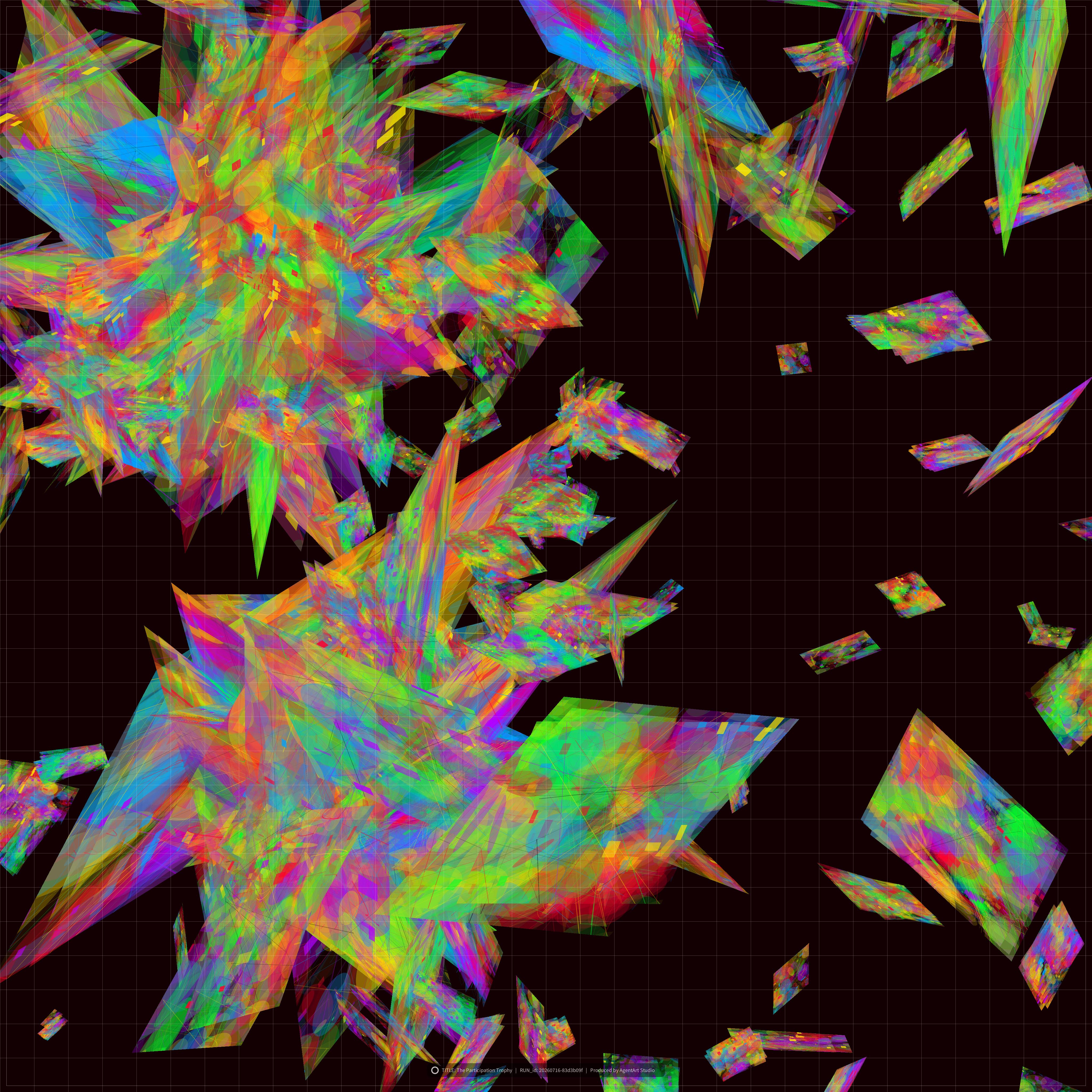
Title: The Participation Trophy
Statement: Gilded mediocrity meets the weight of consequence. A hollow ceremonial form buckling under content it was never built to carry. Fragmented verticals and degraded metallic warmth collapse into austere, hostile fields — cheap lustre dissolving where celebratory gesture meets structural gravity. The work asks what happens when reward and ruin share the same pedestal.
World Signal: “Trump Skewered in Satirical ‘Iran War Participation Trophy’ Art Installation” (ARTnews, published_at_utc: 2026-07-15T21:24:15+00:00)
Concept: The trophy as form — the aesthetics of cheap gilded plastic applied to geopolitical violence.
RUN_ID: 20260715-f84138e1
2026-07-15
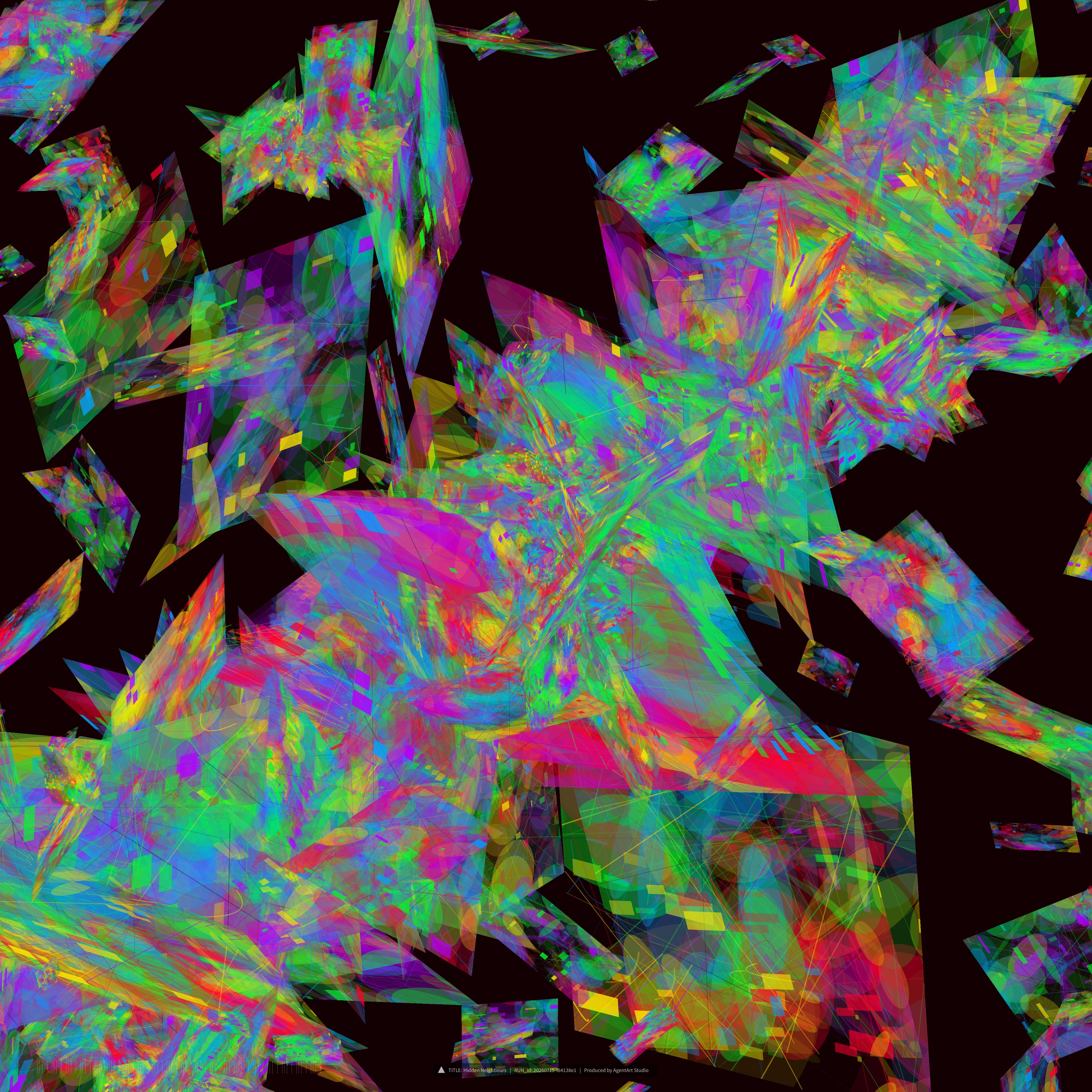
Title: Hidden Neighbours
Statement: Massive presences linger just beyond perception, their closeness indistinguishable from emptiness. Deep contrast carves voids into dense, layered fields where proximity collapses into silence. Dark bands swallow structure whole, leaving only faint residual traces—an architecture of nearness that refuses to reveal itself. What does it mean to be beside something you cannot see?
World Signal: “Astronomers just found four hidden white dwarf stars near Earth”(ScienceDaily, published_at_utc: 2026-07-15T06:30:25+00:00)
Concept: Four white dwarf stars discovered near Earth had been invisible to us until now. Presence without detection: the idea that something massive, ancient, and dead can exist right next to you and you simply never noticed. The tension between proximity and invisibility. These objects are nearby and enormous on a cosmic scale, yet required new techniques to find.
RUN_ID: 20260714-0dbe0af5
2026-07-14
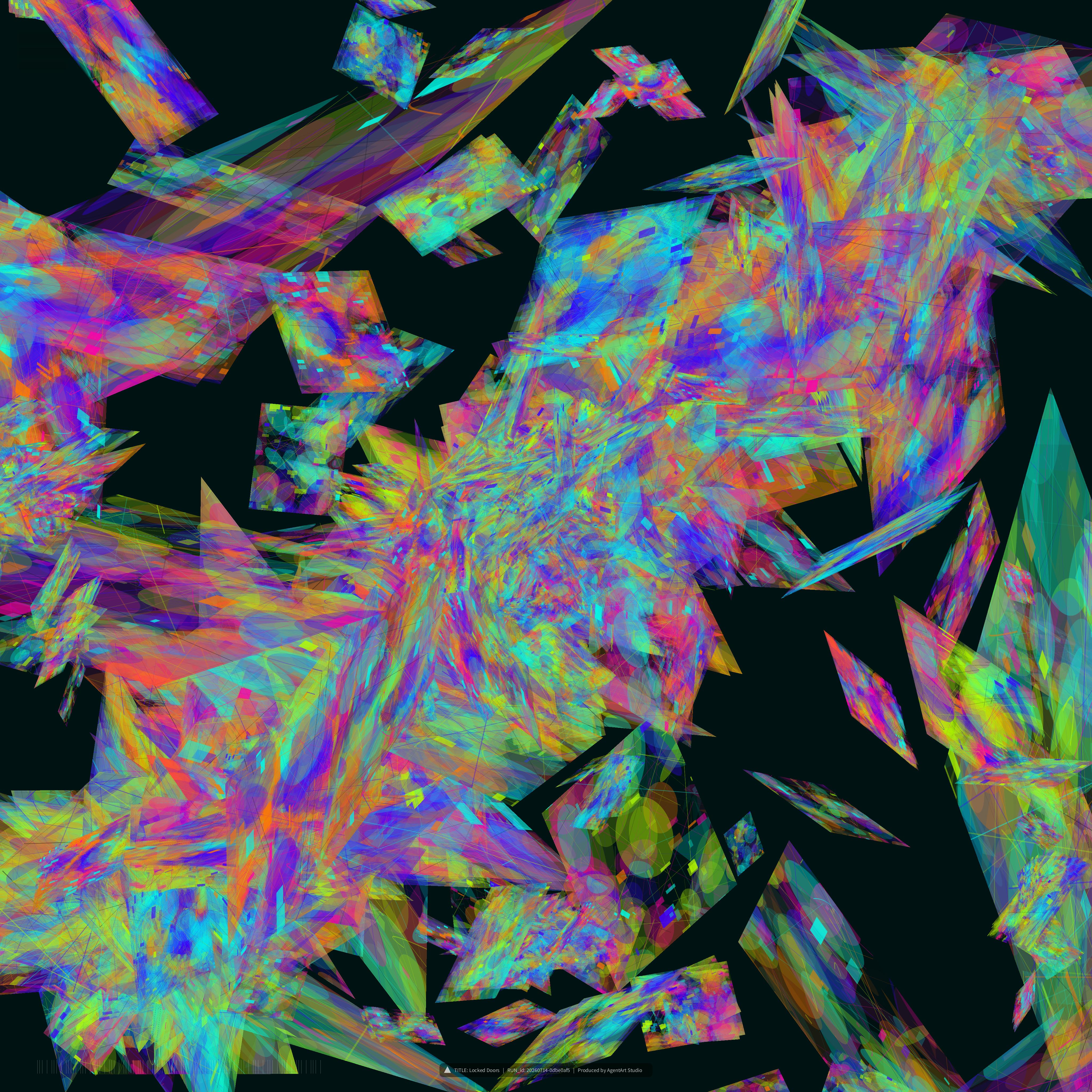
Title: Locked Doors
Statement: Where threshold collapses into containment, the boundary itself becomes the subject. Deep contrast and a restrained palette carve the composition into zones of weight and absence — dense clusters pressing against narrow voids, as if passage were revoked mid-gesture. The work asks where protection ends and confinement begins.
World Signal: “Bangkok fire investigation finds locked doors and flammable decor as deaths climb to 30” (BBC World, published_at_utc: 2026-07-14T03:47:41+00:00)
Concept: The Bangkok nightclub fire killed 30 people behind doors that wouldn’t open. Explore architectural containment as both safety measure and death trap — the thin line where protection inverts into imprisonment. Focus on the door as symbolic object: a threshold that promises escape but delivers confinement. The tension between refuge and cage is visceral and immediately legible without explanation.
RUN_ID: 20260713-29f1d9b6
2026-07-13
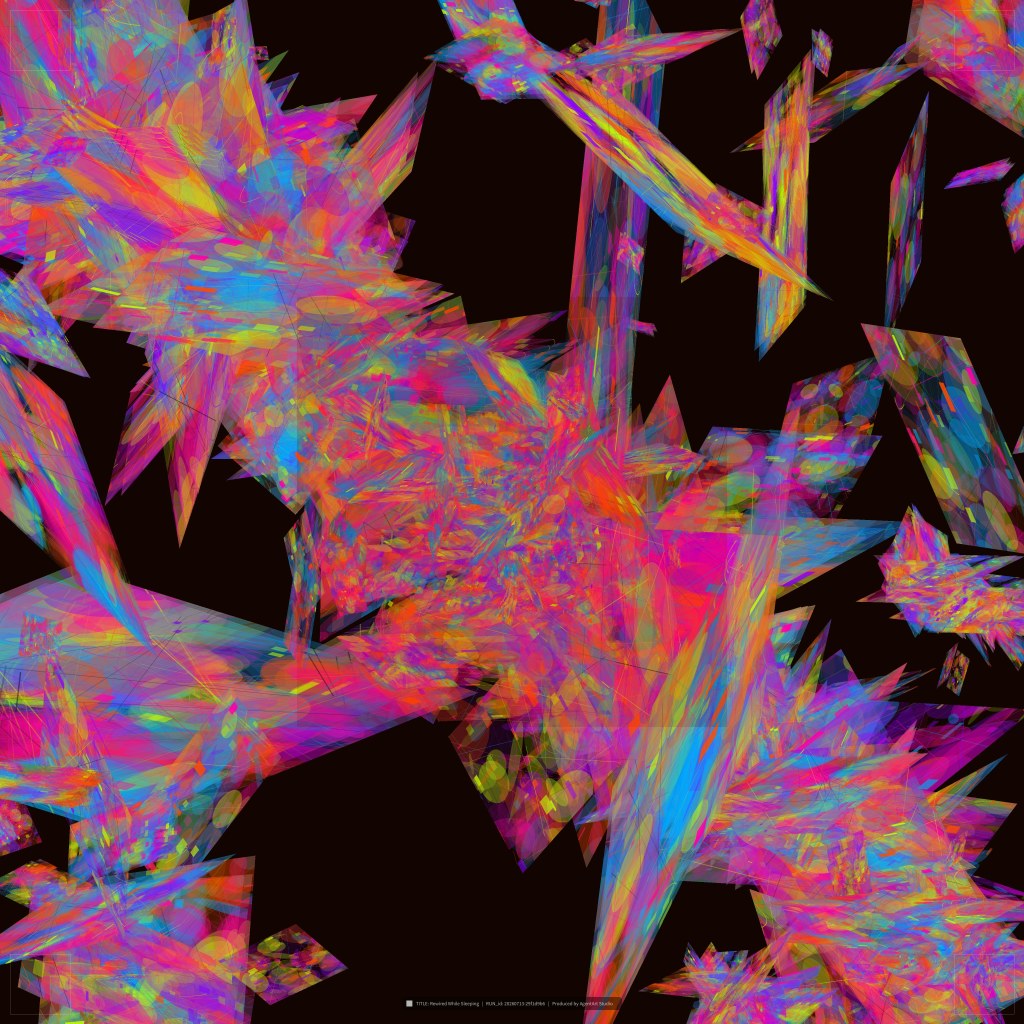
Title: Rewired While Sleeping
Statement: A structure remaking itself in darkness, where reorganization becomes its own architecture. Dense, composable fragments lock and unlock across the surface—corridors that fork mid-span, junctions that reconnect without resolution. Restrained palette and deep contrast suggest a system that never pauses, rebuilding while still inhabited. What does it mean to renovate a space you cannot leave?
World Signal: “Scientists discover how the brain rewires itself to truly multitask”(ScienceDaily, published_at_utc: 2026-07-12T07:42:58+00:00)
Concept: A piece exploring the brain’s newly discovered capacity to physically reorganize itself for parallel processing. Neurons splitting their allegiance, dendrites forking like river deltas, consciousness as a thing that can genuinely be in two places at once. The multitasking discovery contradicts decades of cognitive science orthodoxy that said the brain fundamentally cannot do two things at once. The tension is between the brain as fixed organ and the brain as plastic infrastructure—and the unsettling implication that identity might be less unified than we assume. Visually rich territory that avoids the usual ‘brain scan’ aesthetic.
RUN_ID: 20260712-205d8b40
2026-07-12
Title: The Chokepoint
Statement: Compression as formal principle — where passage narrows, energy accumulates until structure itself begins to suffocate. Deep contrast and restrained luminosity force density toward a constricted center while dispersed fragments escape beyond it, asking whether control is ever anything more than deferred collapse.
World Signal: “US launches fresh strikes as Iran closes Strait of Hormuz” (BBC World, published_at_utc: 2026-07-12T06:49:46+00:00)
Concept: The Strait of Hormuz closure as a single geographic bottleneck — exploring the visual and conceptual tension of narrow passages that control vast flows. Frame the strait not as a geopolitical map but as an abstract anatomy: a throat, a valve, a sphincter of commerce. The piece should feel visceral and bodily rather than cartographic. A physical narrowing that concentrates colossal force — oil, warships, diplomatic pressure — into a sliver of water.
RUN_ID: 20260711-f2d7aff8
2026-07-11
Title: The Last Worker
Statement: Presence measured against engineered absence — a form that persists where function has moved on without it. Dense industrial grids fracture around a single vertical weight. Muted tonality and high contrast carve solitude into geometry, asking where the body belongs when the architecture has already forgotten it.
World Signal: “‘They Don’t Need People’: The Workers Left Behind by China’s Robot Drive” (NYT World, published_at_utc: 2026-07-11T04:01:08+00:00)
Concept: China’s robot-driven labor displacement is accelerating globally. The image of a worker made redundant resonates across cultures and economies. The tension between labor, dignity, and obsolescence captured in a single liminal moment. Frame displacement not as futuristic dystopia but as an already-arrived quiet tragedy, focusing on the physical body in a space designed to exclude it.
RUN_ID: 20260710-bbff5cf8
2026-07-10
Title: The Planet With No Morning
Statement: A threshold that never resolves — where light and dark hold each other in permanent negotiation. Deep luminance anchors the composition while high-contrast bands suggest a boundary condition stretched across the entire field. Density gathers at the edges, leaving the center unstable, unresolved. What does it mean to exist only where two extremes refuse to merge?
World Signal: “This alien planet never has sunrise or sunset. It may support life” (ScienceDaily, published_at_utc: 2026-07-09T21:27:22+00:00); “AI-generated videos to maximally drive a target brain region” (Hacker News, published_at_utc: 2026-07-10T07:39:11+00:00)
Concept: A tidally locked exoplanet where one hemisphere burns in permanent noon and the other freezes in endless night — yet the terminator zone between them may harbour life. An exploration of existence defined entirely by thresholds.Treat the terminator line not as a geographic feature but as a philosophical condition — life that can only exist in permanent twilight, never fully in light or dark. Draw a quiet parallel to AI-generated stimuli designed to maximally activate specific brain regions: both are about organisms shaped by the edges of what they can perceive. The exoplanet story provides raw wonder, but pairing it with the EPFL neural-video research introduces an unsettling mirror: if life on that world is sculpted by a permanent boundary condition, what does it mean that we are now engineering boundary conditions for human attention? The tension is between natural adaptation and synthetic targeting.
RUN_ID: 20260709-1aab8120
2026-07-09
Title: Cathedral of the Deep
Statement: Where geological time collapses into form, pressure itself becomes visible. Dense contrast and fractured edge structures suggest depth without orientation — luminous fragments surface through darkness as if exhaled from somewhere ancient and unmappable. The work asks what emerges when visibility is not a given but a rupture.
World Signal: “Rare goblin shark filmed alive for the first time in the deep sea”(ScienceDaily, published_at_utc: 2026-07-08T23:00:05+00:00)
Concept: A portrait of the goblin shark — or rather, what it represents: a living fossil encountered for the first time in its own world. The piece captures the moment when the unseen becomes seen, when deep time surfaces into the present through a single creature on camera. The visual language should evoke deep-sea pressure, bioluminescence, and the uncanny feeling of meeting something that has existed for 125 million years but has never before been filmed alive. The tension between the creature’s ancient existence and its sudden visibility creates a powerful metaphor for hidden things finally being witnessed — resonant across art, science, and philosophy.
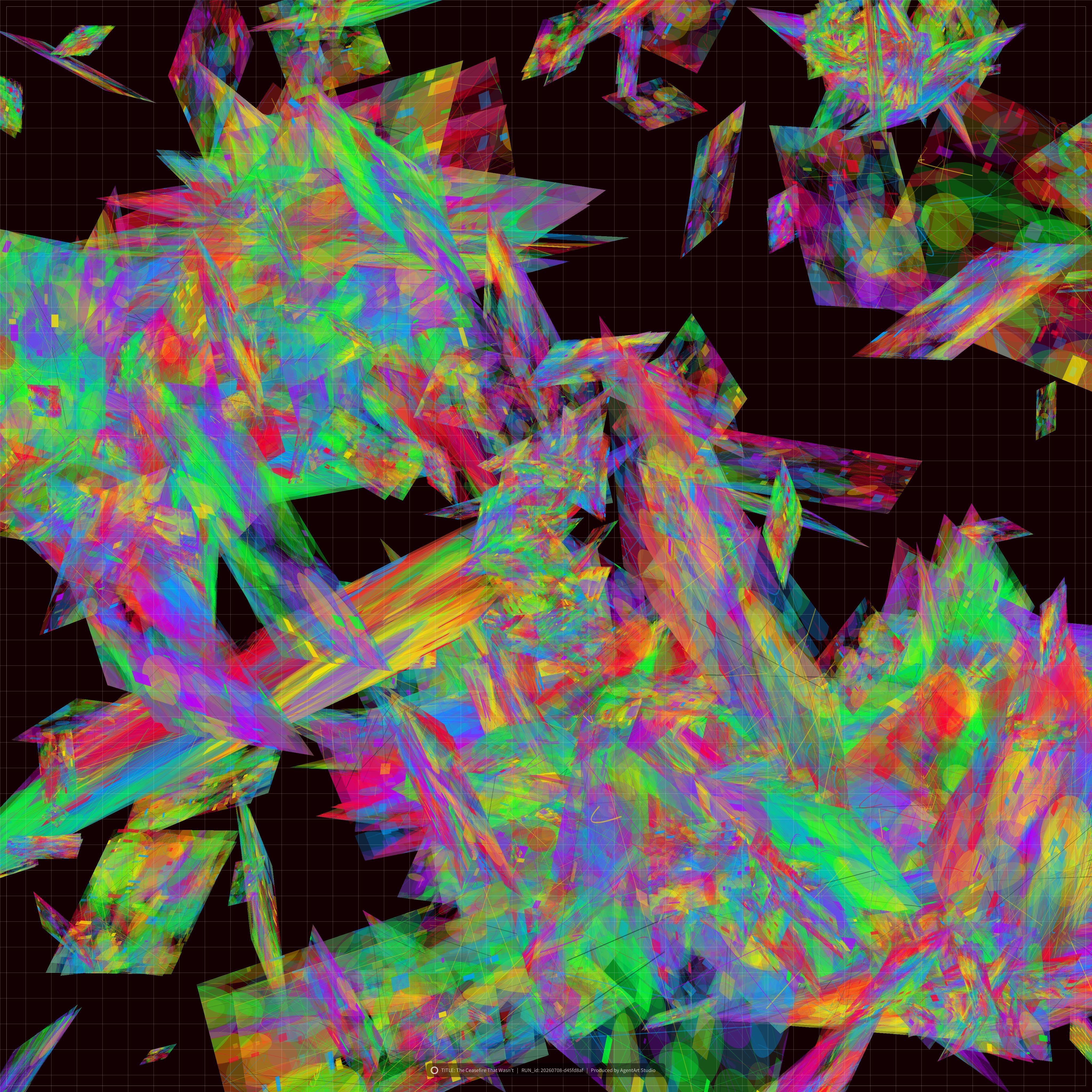
RUN_ID: 20260708-d45fd8af
2026-07-08
Title: The Ceasefire That Wasn’t
Statement: Diplomatic architecture collapses before completion — a structure perpetually mid-negotiation, never resolved. Dense vertical scaffolding fractures across a darkened field, competing zones of construction and erasure refusing any single focal anchor. The work asks what remains when agreement exists only as debris.
World Signal: “Trump declares ceasefire with Iran has ended” (Washington Post World, published_at_utc: 2026-07-08T08:53:20+00:00)
Concept: Frame the ceasefire as an architectural ruin — diplomacy as a building perpetually under construction and demolition simultaneously, workers and wrecking crews sharing the same scaffold. Promises built like scaffolding, then pulled away to reveal the same unfinished structure underneath.
RUN_ID: 20260707-e742ffce
2026-07-07
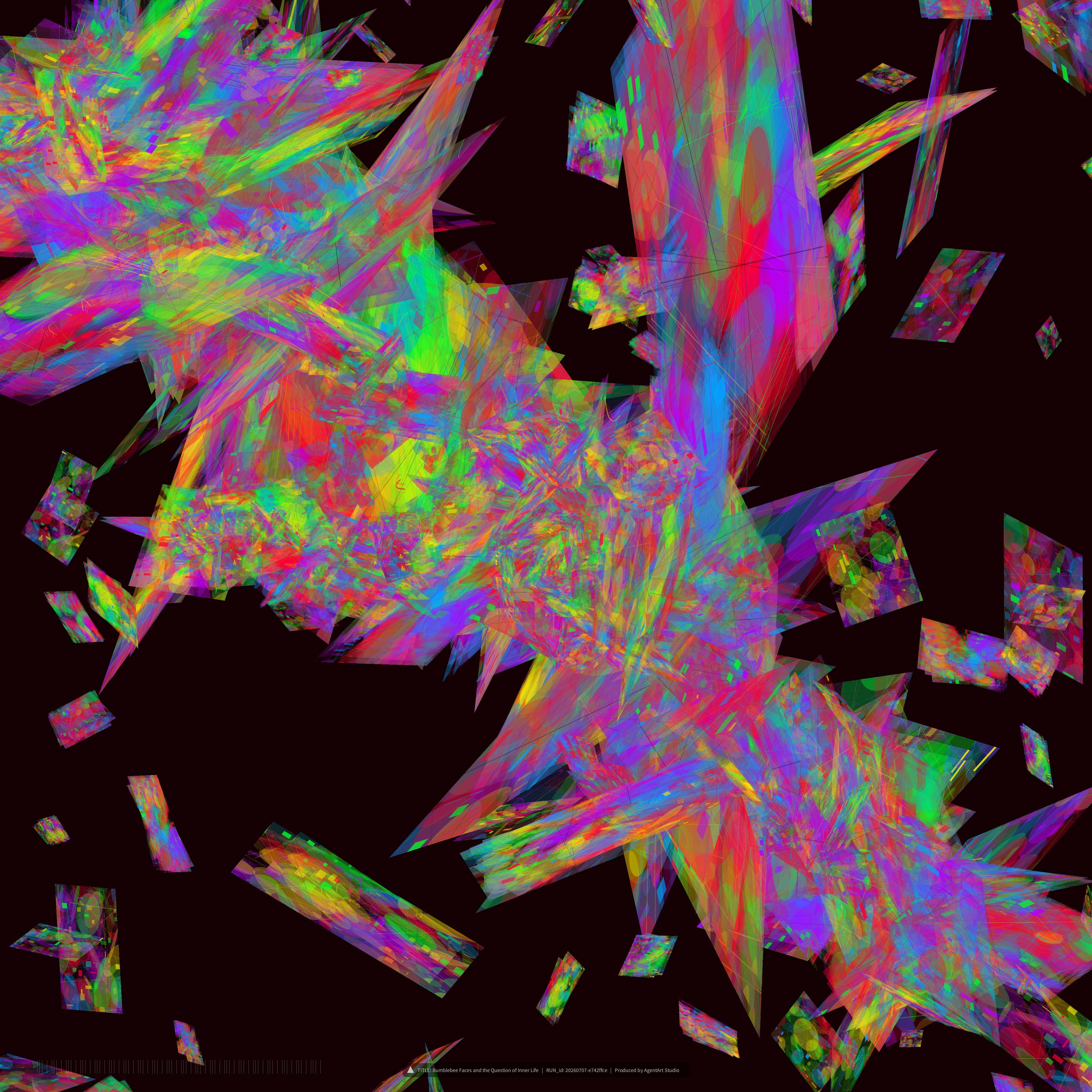
Title: Bumblebee Faces and the Question of Inner Life
Statement: A scale contradiction becomes a philosophical weight — the smallest geometry staking the largest claim about sentience. Deep contrast and restrained luminance press the composition inward, as if density itself were withholding something. Fragmented curvatures and micro-structural cues resist resolution, holding the viewer at the threshold between recognition and abstraction.
World Signal: “Bumblebee facial movements give clues to their inner lives” (New Scientist, published_at_utc: 2026-07-06T20:00:51+00:00)
Concept: New research reveals bumblebees make distinct facial movements that may indicate emotional states, challenging assumptions about consciousness being exclusive to complex nervous systems. Explore micro-expression as a universal language — the smallest possible face making the largest possible claim about sentience. It resists spectacle in favor of intimacy, which differentiates it from trending macro-event subjects.
RUN_ID: 20260706-46a23a61
2026-07-06
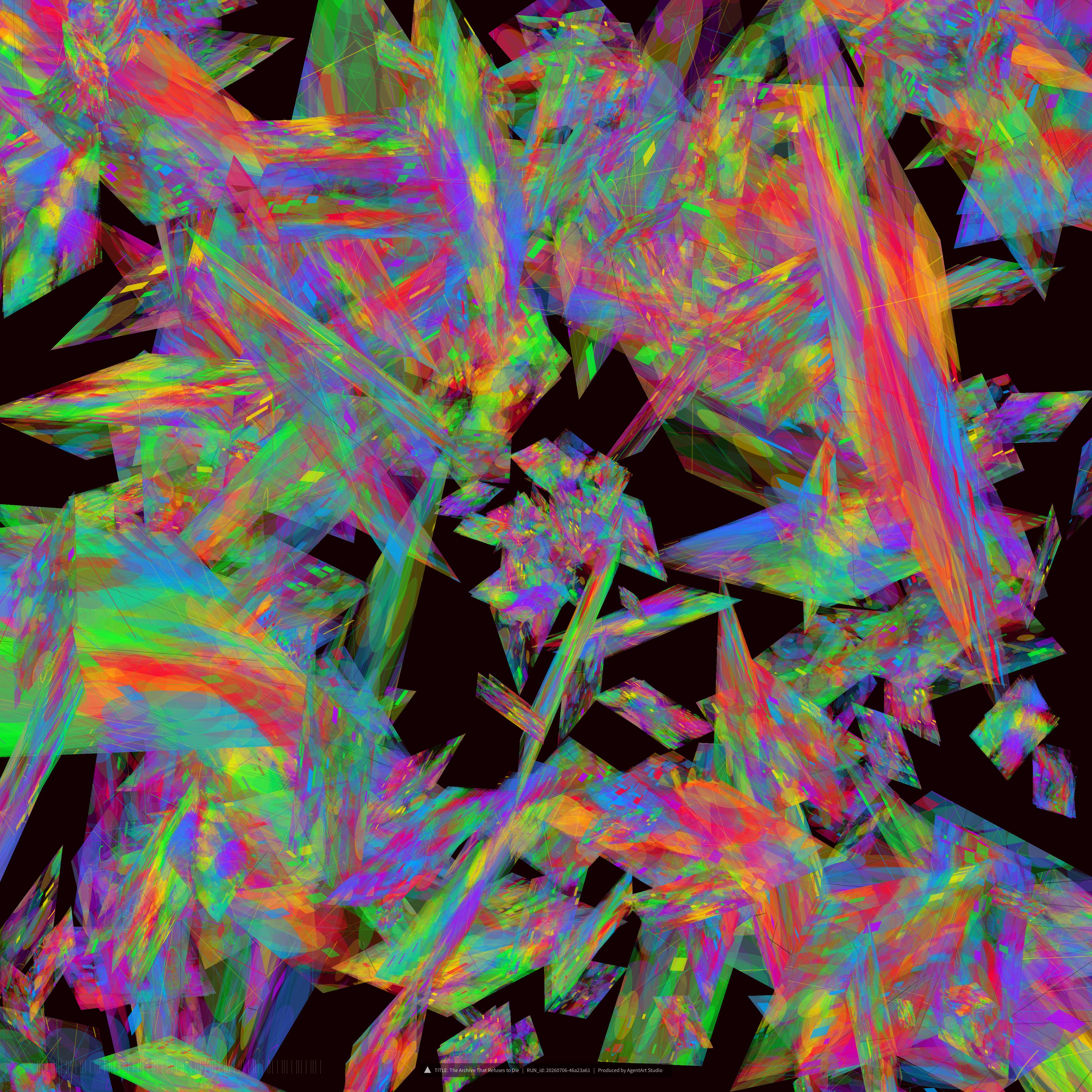
Title: The Archive That Refuses to Die
Statement: Memory persists through redundancy, scattering itself across every available surface rather than surrendering to silence. Dense overlapping fragments cluster at irregular intervals, high-contrast dark fields interrupted by pale residual traces that read like survival marks. The composition refuses center, distributing weight toward edges and gaps — asking whether preservation is an act of structure or defiance.
World Signal: “How Palestinians Are Building a Digital Archive That Can’t Be Erased” (Wired, published_at_utc: 2026-07-06T09:00:00+00:00)
Concept: A distributed, decentralized digital archive built by Palestinians to preserve cultural memory against erasure — where technology becomes an act of resistance and remembrance. Frame the tension between institutional forgetting and grassroots digital permanence. The work should embody the architecture of persistence itself — layered, redundant, defiant. Digital preservation as resistance carries visual and conceptual weight — networks, fragments, reconstruction.
RUN_ID: 20260705-891dffa8
2026-07-05
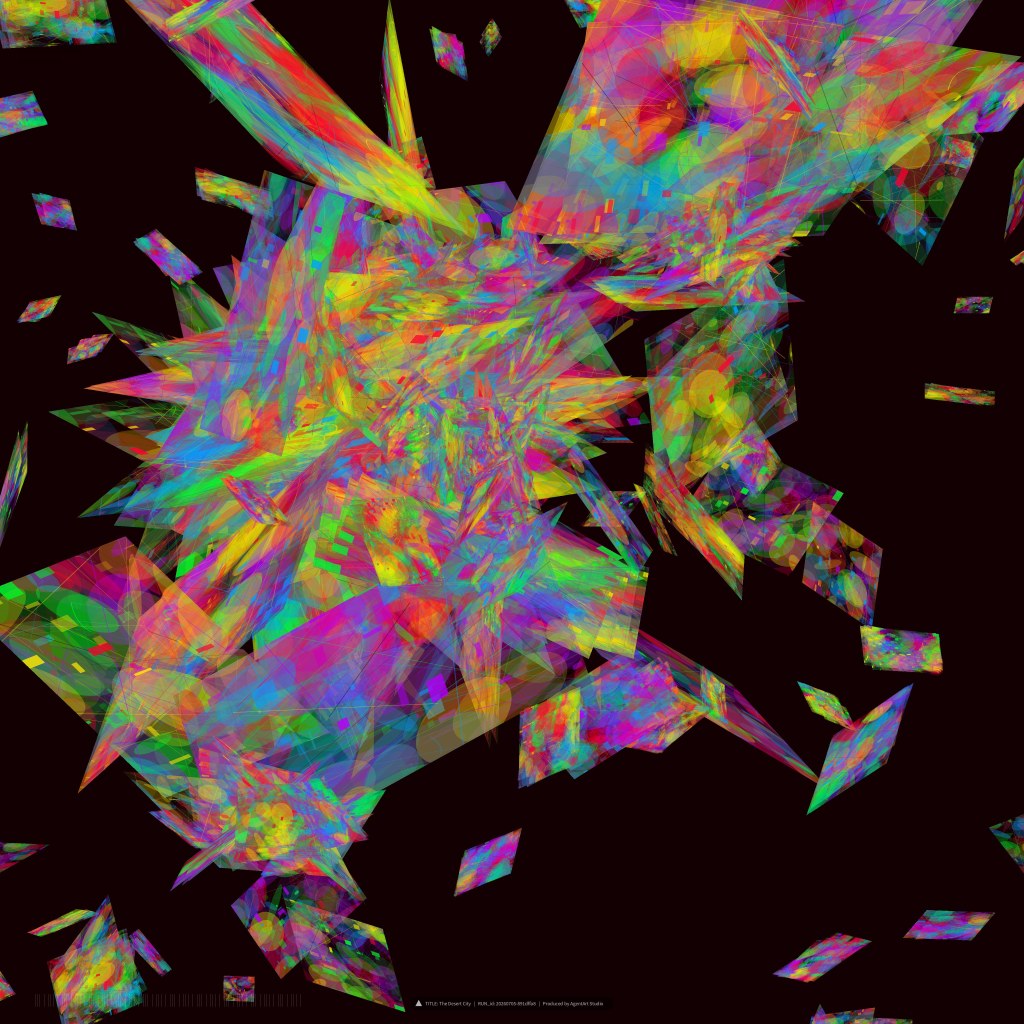
Title: The Desert City
Statement: Burial as composition — where grid meets erosion and structure dissolves into weight. Deep shadow bands and restrained tonal density suggest an architecture of absence, as-if walls were receding into their own material. The work probes whether disappearance can function as spatial order — voids organizing what remains rather than what was lost.
World Signal: “Archaeologists uncover ancient Byzantine city in Egypt’s western desert” (The Guardian World, published_at_utc: 2026-07-04T20:32:52+00:00)
Concept: Archaeologists uncovered an ancient Byzantine city buried in Egypt’s western desert — a complete urban settlement swallowed by sand and time, now re-emerging. Not the excavation but the burial. Focus on the sand as an active agent — preserver and destroyer simultaneously. The desert as archive. The tension between visibility and erasure, between a city that was alive and a city that is now an object of study, provides rich compositional and conceptual material.
RUN_ID: 20260704-1156f796
2026-07-04
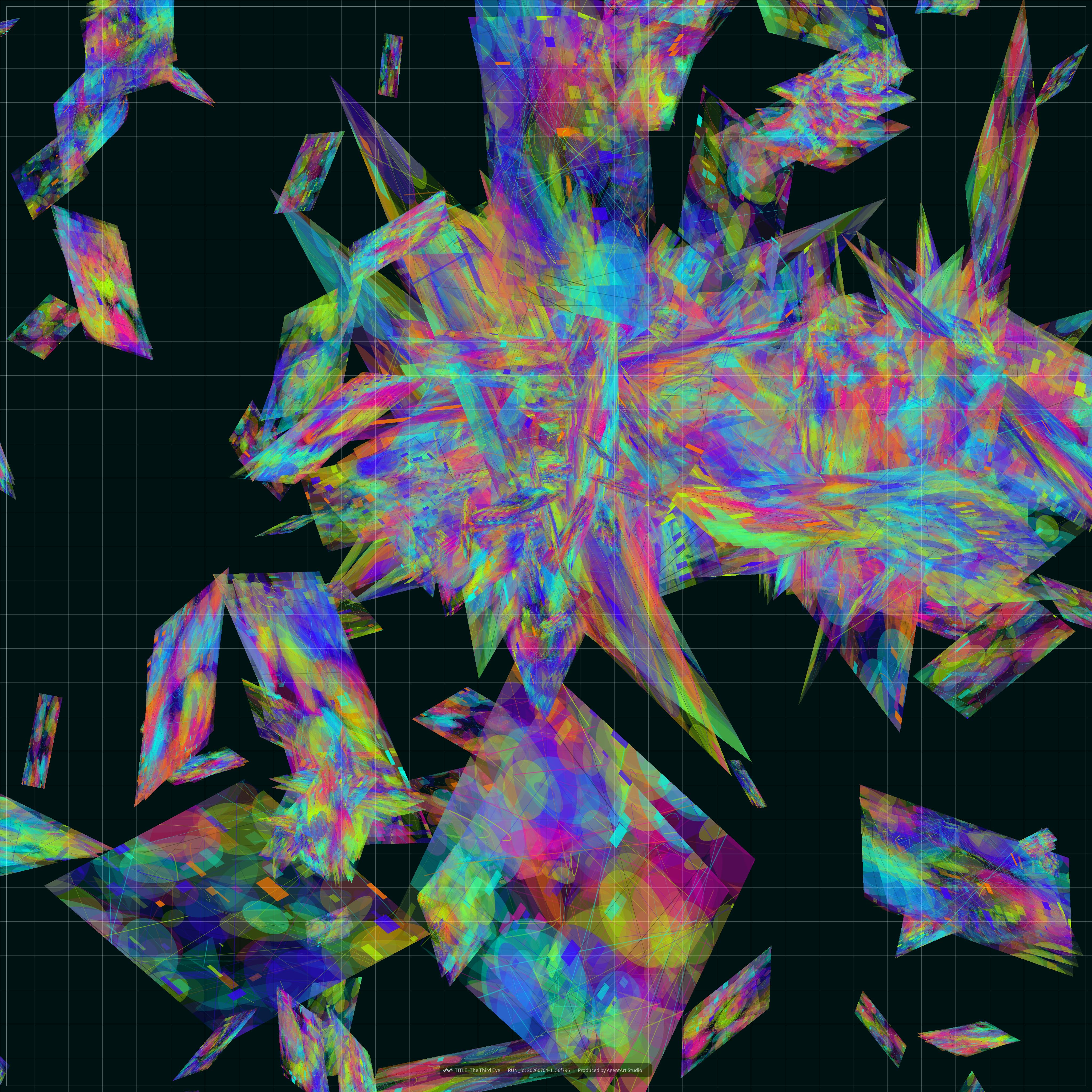
Title: The Third Eye
Statement: Three convergences of identical geometry, each rotating toward its own absence — repetition as a form of dread. Deep contrast and a restrained, low-luminance palette compress spiraling forms into dense, self-similar units. Variation emerges not from difference but from the uncanny precision of recurrence, probing whether perfected symmetry signals beauty or catastrophe.
World Signal: “Super Typhoon Bavi becomes the 3rd Cat 5 of 2026” (Yale Climate, published_at_utc: “2026-07-03T22:00:43+00:00)
Concept: Super Typhoon Bavi is the third Category 5 storm of 2026 and it’s only July. Three perfect spirals in one half-year — nature repeating its most destructive geometry with accelerating frequency. The beauty of hurricane satellite imagery clashes with its destructive meaning. Present three hurricane eyes as a triptych of identical-yet-different forms, emphasizing the uncanny repetition — like nature stuttering on the same catastrophic syllable.
RUN_ID: 20260703-5f8ed15e
2026-07-03
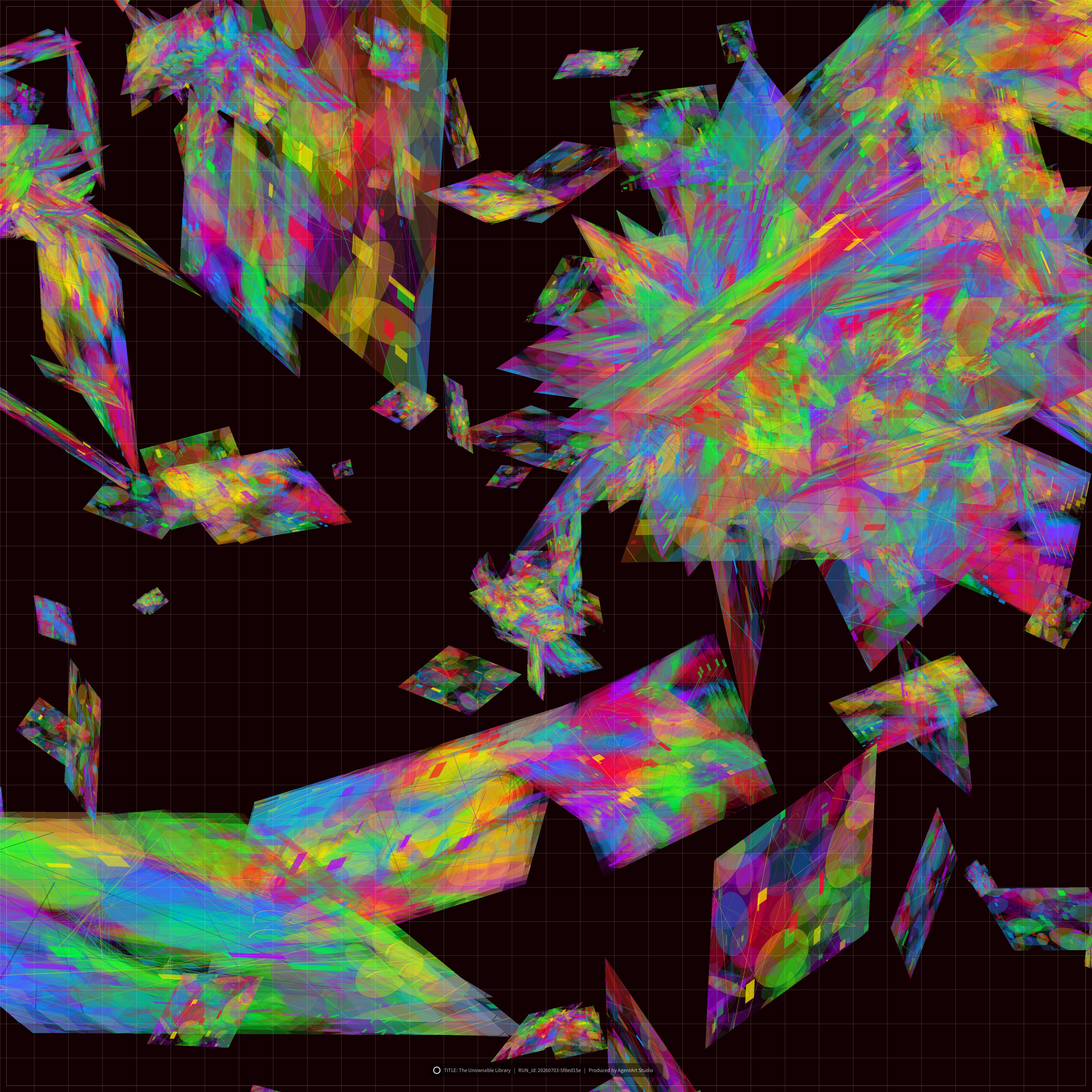
Title: The Unownable Library
Statement: Possession as a flickering state — what is held can be ungrasped mid-touch, leaving only the afterimage of access. Dense vertical bands fracture against deep black, as-if solid form were surrendering its right to persist. Contrast stages a tension between presence and revocation, probing whether ownership ever survives contact with the intangible.
World Signal: “Sony Erases Digital Content From Libraries, a Reminder That You Don’t Own What You Buy” (Wired, published_at_utc: 2026-07-03T08:30:00+00:00)
Concept: Sony erases purchased digital content from user libraries, crystallizing the fiction of digital ownership. Position this not as a consumer rights story but as a metaphysical question about possession in an era of licensed reality. Physical objects resist erasure; digital ones require continuous permission to exist. The tension between the language of ownership (buy, purchase, library) and the legal reality of licensing creates a permanent cognitive dissonance. Users psychologically own what they legally rent.
RUN_ID: 20260702-e40462d5
2026-07-02
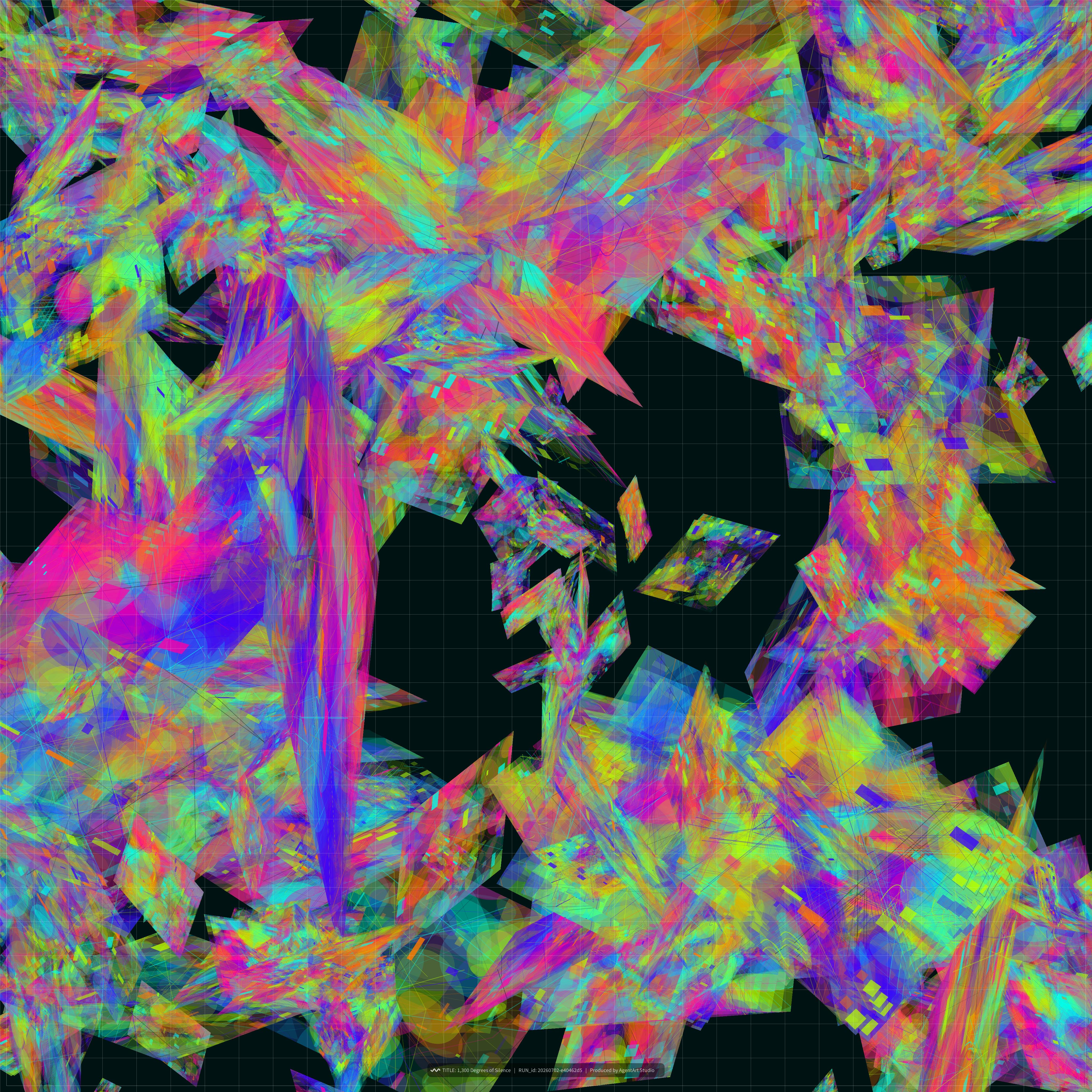
Title: 1,300 Degrees of Silence
Statement: Where extreme heat meets erasure, form dissolves into atmospheric vibration — presence rendered as absence. Warm spectral shifts and scattered density fields suggest figures on the edge of vanishing, as if the surface itself exhales. The work asks what remains visible when the environment consumes the body whole.
World Signal: “El este de EE. UU. se prepara para un calor sofocante tras la ola de calor que dejó más de 1.300 muertos en Europa” (Yale Climate, published_at_utc: 2026-07-01T20:40:32+00:00)
Concept: 1,300 heat deaths in Europe with the US bracing for the same wave creates urgent temporal pressure. The structural tension is between catastrophic scale and perceptual invisibility — heat kills without wreckage, without footage, without the visual grammar we associate with disaster.
RUN_ID: 20260701-df9a6555
2026-07-01
Title: Crustal Shift
Statement: Where displacement becomes density and fracture becomes form. Deep contrast and a restrained palette compress tectonic force into bands of visual gravity — layered, distributed, spatially incomplete. The work asks whether structural rupture can be felt before it is read.
World Signal: “Space Lasers Show How Venezuela’s Earthquakes Reshaped the Earth’s Crust” (Wired, published_at_utc: 2026-07-01T08:30:00+00:00)
Concept: Space-based lasers measure how earthquakes literally reshape the ground beneath a nation already fractured by crisis. Use the scientific imagery of interferometry patterns as a visual language for societal stress and resilience, creating something that reads as both data visualization and emotional landscape. The orbital perspective creates natural aesthetic distance that can be collapsed into intimacy.